
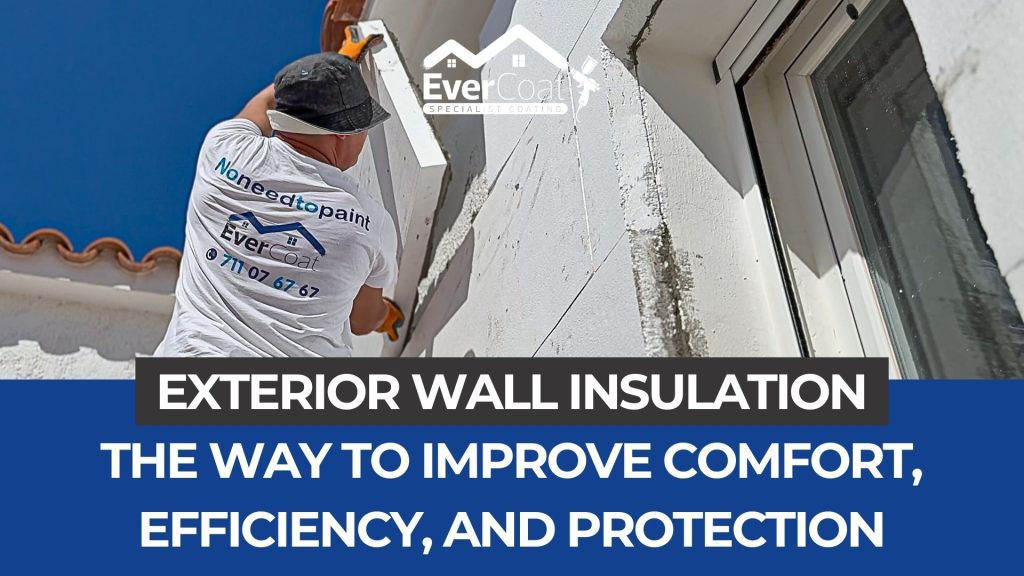
Many homeowners struggle with the same issues year after year: homes that overheat in summer, feel cold in winter, suffer from damp patches, or generate constantly rising energy bills. These problems are often treated separately, yet in most cases they share a common cause—the exterior walls. Exterior wall insulation is one of the most effective solutions for improving how a home performs, feels, and ages over time, especially in Spain’s demanding climate.
In regions with strong sun exposure, seasonal rain, humidity, and temperature fluctuations, exterior wall insulation is not just an energy upgrade. It is a comprehensive improvement that enhances comfort, protects the structure, and reduces long-term maintenance. This article explains what exterior wall insulation is, why it works so well, and how it fits naturally into modern facade renovation.
What Is Exterior Wall Insulation?
Exterior wall insulation is a system installed on the outside of a building that reduces heat transfer between the interior and exterior environments. Instead of insulating from the inside, this method wraps the entire structure in a continuous thermal layer, creating a protective envelope around the home.
This approach keeps the main wall structure within the insulated zone, meaning it is far less exposed to extreme temperatures, moisture, and thermal stress. As a result, the walls remain more stable throughout the year, improving both comfort and durability.
Why It Works Better Than Internal Solutions
While internal insulation can improve comfort, it often comes with compromises. Interior space is reduced, thermal bridges remain, and the wall structure is still exposed to temperature swings. Exterior wall insulation avoids these issues entirely.
By insulating from the outside, thermal bridges are minimized, surface temperatures become more consistent, and condensation risk is reduced. The wall itself becomes part of the thermal mass of the building, helping regulate indoor temperatures naturally.
Wall Insulation in Spain’s Climate
Spain’s climate makes exterior wall insulation especially valuable. Prolonged sun exposure causes walls to absorb and store heat during the day, which is then released indoors during the evening. In winter, the opposite happens—heat escapes through unprotected walls, making interiors harder to warm.
Exterior wall insulation significantly reduces these effects. Homes stay cooler during hot months and retain warmth more efficiently in cooler periods. In coastal areas, insulation also helps protect walls from humidity and salt-laden air, reducing the risk of surface deterioration and dampness.
Everyday Comfort Benefits
One of the most noticeable benefits of exterior wall insulation is improved comfort. Rooms maintain more stable temperatures, exterior walls feel warmer in winter, and overheating in summer is reduced. Drafts are minimized, and living spaces become more pleasant throughout the day.
Noise reduction is another advantage. The additional layers dampen external sounds, which is especially beneficial in urban environments or near busy roads.
Energy Efficiency and Reduced Bills
Exterior wall insulation plays a key role in improving energy efficiency. With reduced heat loss and heat gain, heating and cooling systems operate more efficiently. This leads to lower energy consumption and reduced utility costs over time.
In homes with exterior wall insulation, air conditioning systems are used less frequently in summer, and heating systems maintain comfort more easily in winter. The result is a noticeable reduction in energy bills and a more sustainable home.
Moisture Control and Damp Prevention
Moisture-related issues are common in buildings without proper exterior protection. Cold wall surfaces encourage condensation, which can lead to damp patches and mold growth.
Exterior wall insulation keeps wall surfaces warmer and helps regulate moisture movement through the facade. When combined with breathable rendering systems and waterproof exterior coatings, it creates a balanced wall system that manages both temperature and humidity effectively.
Exterior Wall Insulation as Part of Facade Renovation
Exterior wall insulation is most effective when integrated into a full facade renovation. During this process, existing surface damage can be repaired, insulation installed, and the facade finished with smooth rendering or protective coatings.
This approach modernizes the appearance of the home while delivering long-term performance improvements. Instead of relying on frequent repainting, the facade becomes a durable, low-maintenance system designed to last.
Finishing Insulated Facades with Smooth Rendering
Once exterior wall insulation is installed, the facade requires a protective and aesthetic finish. Smooth rendering is a popular option, offering clean lines, modern appeal, and compatibility with insulation systems.
Smooth rendered facades are easier to maintain, resist dirt and algae buildup, and provide an ideal base for additional protective coatings that enhance UV and weather resistance.
Structural Protection and Longevity
Exterior wall insulation protects the building structure by reducing thermal stress. By limiting expansion and contraction caused by temperature changes, it helps prevent cracking and surface deterioration over time.
This protection allows the building to age more predictably and reduces the likelihood of costly structural repairs in the future.
Is Exterior Wall Insulation Right for Your Home?
Exterior wall insulation can be adapted to a wide range of properties, from modern villas to older homes. Factors such as wall condition, architectural style, and local regulations influence the final system design.
A professional assessment ensures the insulation thickness, materials, and finishing systems are suited to the specific property and climate conditions.
Exterior Wall Insulation as a Long-Term Investment
From a property value perspective, exterior wall insulation is increasingly seen as a premium upgrade. Energy efficiency, comfort, and low maintenance are key decision factors for buyers, particularly in Spain’s international property market.
An insulated facade improves energy ratings, reduces visible wear, and signals that the home has been designed for long-term performance.
Exterior wall insulation is one of the most effective ways to improve a home’s comfort, efficiency, and durability. It addresses heat loss, overheating, moisture issues, and facade wear at their source.
When combined with modern rendering and protective exterior systems, exterior wall insulation becomes a holistic solution that transforms how a home performs and feels—today and for years to come.
CONTACT US TODAY FOR A FREE HOUSE VISIT & QUOTATION!
+34 602 299 523 | info@ever-coat.com