
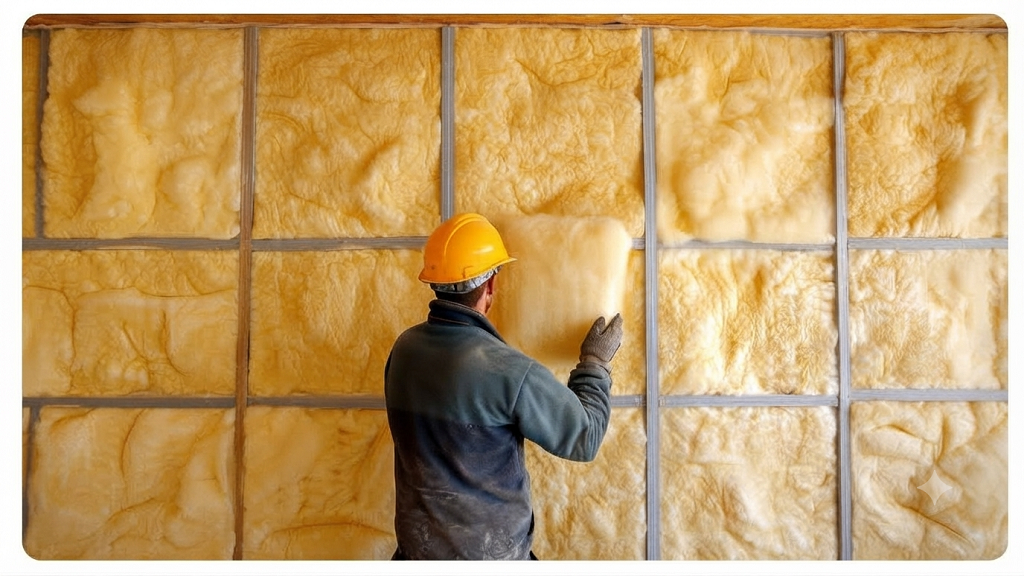
If your house is freezing in the winter and roasting in the summer, the culprits may not be the heating or air conditioning. They may be your walls. SATE insulation (Sistema de Aislamiento Térmico por el Exterior, also known as EIFS or ETICS) surrounds the perimeter of the home with an insulating layer on the outside walls. These are the ten benefits that homeowners see most often.
What Is SATE Insulation?
SATE insulation is an insulation system which fixes insulation panels to the outer surface of the walls, followed by reinforcing base coating and decorative rendering. By fixing the panels on the outside of the building, insulation occurs throughout the building envelope rather than between partitions, or within building cavity walls.
The insulation panels are typically made of expanded polystyrene (EPS), graphite EPS, extruded polystyrene (XPS) or mineral wool. The choice of material will depend on the building type, climatic conditions and budget.
10 Benefits of SATE Insulation
1. Lower Energy Bills
Warm air will always escape out through the walls and cool air will enter in during the summer. By installing an external insulation system this exchange is greatly reduced and the work-load for your heating and air-con is lightened. Although this differs from property to property the majority see a big difference on their next bill, especially if they have old uninsulated walls.
2. Year-Round Comfort
As mentioned above, insulation works both ways. As well as keeping the warm air in during the winter it will also keep the searing summer heat out. This can be just as important in places such as the Costa Blanca, Spain where the winters are mild but the summers are extremely hot.
3. It Eliminates Thermal Bridges
The most common thermal bridges are found on slab edges, pillars and around corners. These are weak points in your insulation were more heat is lost. Internal insulation can often miss these areas but since SATE (External insulation) is a continuous layer it will cover and seal these problem areas.
4. Less Condensation and Mould
Condensation tends to form on cold surfaces, this can lead to damp patches and mould forming on walls in your home. By warming up your walls with SATE insulation you greatly reduce the risk of this occurring and create a much healthier living environment.
5. No Loss of Interior Space
With internal insulation you sacrifice floor space and often have to re-decorate. SATE preserves all interior floor space as no work is done inside your home, all the insulation is done externally.
6. Minimal Disruption While You Live There
As the work takes place externally, you can stay in your home during the renovations. There is no need to remove every piece of furniture in your home and clear your internal walls.
7. Protection for Your Facade
The reinforced base coat (often a mixture of cement-based mortar with fiber glass mesh) of the SATE protects the panels and the old building fabric from the effects of weather, which reduces cracks and deterioration.
8. A Brand-New Look
SATE is also a renovation of the facade. After the thermal insulation has been applied, it is possible to finish the new coating with different kinds of surface layer in various colors. Many homeowners find that this is as good an opportunity to completely renovate their home’s facade. It is worth exploring what materials and finishes can be used.
9. Better Sound Insulation
Depending on the type of panel used in the SATE, soundproofing qualities can also be improved. Particularly mineral wool panels have proven themselves in reducing outside noise, e.g. from a highway or a busy town square.
10. Higher Property Value
Many buyers and renters are interested in the energy efficiency of a home, so a house or apartment with less operating costs and lower emissions is much more desirable.
How Is SATE Insulation Installed?
A correctly executed professional installation follows the following sequence:
- Starting profile: a base profile is levelled and fixed along the bottom of the wall.
- Panels: insulation panels are bonded to the surface with adhesive and mechanically fixed with plugs, usually working horizontally row by row from the bottom up.
- Mechanical fixings: plugs are inserted in the adhesive after the adhesive has cured (this may take up to 24 hours).
- Reinforced base coat: a layer of mortar with fibre glass mesh reinforcement is applied. Areas subject to hard impacts should be reinforced.
- Details: special attention must be paid to corners, windows, doors and joints to avoid weak points.
- Finish: the final decorative coating is applied to complete the system.
Good execution of the detail is the key to achieving a long-lasting system, and the difference between a system that performs for decades and one that fails after only a few years.
Frequently Asked Questions
How much does SATE insulation cost?
It depends on the wall area size, panel type, level of access and finish. The most reliable way to get a fair quote is a site survey.
How long does SATE insulation last?
When properly specified and installed, a SATE system will last for decades, with regular maintenance of the finish.
Can SATE insulation be installed on an existing house?
Yes. It is well suited to renovation projects since it is applied to your existing facade, to a structurally sound wall.
Which panel is best: EPS, mineral wool or XPS?
There is no best, only most suitable for each case. EPS and graphite EPS provide the best value in terms of insulation, while mineral wool panels bring in benefits of fire resistance and acoustic performance, and XPS is more resistant to water ingress.
Do I need planning permission?
It depends on your local authority and building type, and if it’s a community building, you might also need the owners’ approval. Ask your local town hall and the installer you’re considering.
Will SATE insulation make my home look different?
Yes, and that’s a good thing. Since there is always a new finish involved, you can change the whole look of the building’s facade.
Conclusion
From reduced bills and enhanced comfort to reduced mould and a new exterior look, SATE insulation is a worthwhile addition to any building. It not only contributes to the well-being of the inhabitants but also improves the structural integrity and increases the value of the house, being a major upgrade to consider.
Ready to Insulate Your Home?
With extensive experience in the field, our experts can help you select the optimal solution for your insulation needs. We work with graphite EPS, EPS, XPS and mineral wool systems and offer free-of-charge site surveys. Call us to learn more about our range of thermal insulation systems and choose the one that best suits your needs.