
Know that your walls need extra insulation, but should it be on the outside or inside? This is probably one of the most common questions asked by homeowners before any renovations commence, which could have a lasting impact on your comfort, budget and overall home appearance for years to come.
Here is a straightforward comparison of both external and internal insulation to help you decide the best option for you.
What Is External Insulation?
The external insulation is fixed on the outer face of the walls, with panels (normally EPS, graphite EPS, XPS or mineral wool) being bonded and mechanically fixed to the facade and then covered by a reinforced base coat and a decorative finish. This is known in Spain as SATE (or EIFS, as it is known in English). If you want more information, download our guide to SATE insulation systems.
What Is Internal Insulation?
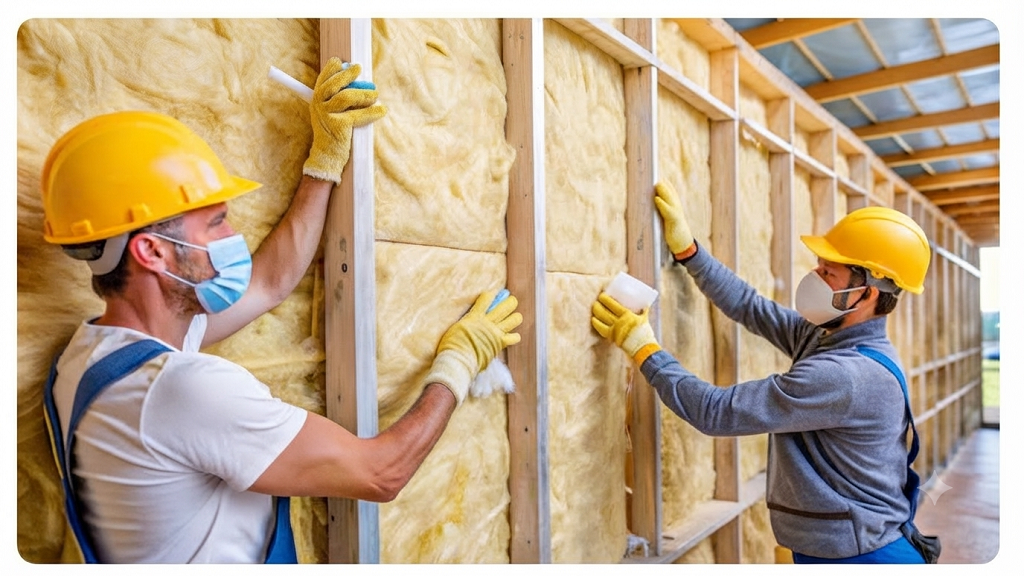
Internal insulation is applied from the inside of the building. It usually involves attaching insulating boards or creating an insulating lining followed by plasterboard and paint. The option is typically selected if it is impossible or undesirable to make changes to the exterior of a building.
External vs. Internal Insulation : Key Differences
Thermal Performance
The external insulation creates a uniform coverage of the building envelope, resulting in reduced thermal bridges (points at which heat is lost through the construction). The key problem areas are the edges of the slab, pillars, the meeting point of the walls and the balcony slab, while these are minimized when using external insulation. On the other hand, internal insulation is interrupted by floor slabs and partitions, creating the same thermal bridges.
As a result, the external insulation provides more consistent, better quality thermal protection for the whole building.
Comfort through the Seasons
By keeping the structural walls on the warm side, the external insulation allows them to absorb and store heat in winter and release it in summer. Internal insulation, on the other hand, causes the structural walls to remain cold, therefore losing heat from the room in winter and storing it in summer. In summer, the inside of the building with external insulation will warm up more slowly and cool down more quickly than a similar building insulated on the inside. This is especially relevant for southern climates, in which the temperature outside rarely drops below 25 degrees Celsius during the summer. As a result, the temperature inside rarely drops below 28-29 degrees in summer if internal insulation is used, while with external insulation, such a temperature jump is prevented.
Condensation and Damp
Where the insulation is located determines the formation of any condensation or moisture. If you choose to use external insulation, the surface of the wall remains significantly warmer, preventing the creation of cold spots. With internal insulation, the area behind the boards can be subjected to cooling, therefore promoting the formation of cold spots and moisture if the work is not done properly. Internal insulation requires additional caution, especially in cases of living in a damp room or one with insufficient air circulation.
Living Space
The placement of internal insulation reduces the living space. When summing up the values lost due to insulation on each wall, the total value is enough to make a noticeable difference, especially in a small room. The option of external insulation is completely safe in this regard as it does not affect the size of the premises.
Disruption during Installation
The interior insulation requires a considerable amount of interference during installation. In most cases, furniture and other items in the room must be removed to allow access to the walls. In addition, internal insulation requires careful planning, taking into account the location of outlets and skirting boards, as well as subsequent restoration and finishing works. At the same time, with external insulation, you can freely move and enjoy the uninterrupted course of work.
Appearance and Facade Protection
The external insulation is also a renovation of the facade. The surface can be smooth or profiled in almost any color and protects the original facade from the weather. The internal insulation has no effect on the outside. You can also study different coatings and finishes to see how the outside can be changed.
Cost
The internal insulation can seem cheaper since there is no need for scaffolding and finishing the facade. On the other hand, the external insulation can replace work that must be done anyway, such as restoring and repainting a worn-out facade, and will often pay off in better energy savings and durability. Look at the costs of the entire project, not just the insulation.
When Is Internal Insulation the Better Choice?
External insulation is not always possible. It makes good sense to insulate from the inside if:
- The building to be insulated has a protected or listed facades
- Tenants or owners are unable to agree on works to the outside of the building
- Only a single room, or a single flat, needs to be upgraded
- Only a party wall or specific portion of the building is to be renewed
For example, if you own a flat on the third floor of a listed building (and therefore cannot renew the facade), the only realistic solution is internal insulation.
When Is External Insulation the Better Choice?
Villa, detached home or complete renovation of a building? Then you will most often be faced with the choice between internal and external insulation. In this case, you should know that external insulation is more effective, and for example, for a cold house, the solution will be a complete renovation of the walls.
Frequently Asked Questions
Which is better : external or internal insulation?
External insulation is more effective since it covers all areas and does not present any thermal bridges. Internal insulation is recommended for cases where it is impossible to intervene on the exterior.
Is external insulation more expensive than internal insulation?
The investment is higher, but it also includes the renewal of the facade finish and has a greater energy efficiency.
Can I install insulation on an existing home?
Yes, both insulation methods can be applied to an existing building, provided that the structure of the walls is suitable for their placement.
Does internal insulation cause damp?
It can cause damp due to incorrect design since the inner part of the wall is subject to colder temperatures. This problem can be avoided by proper material selection and detail design.
Will external insulation change the look of my house?
It can personalize the architecture of the home, since the owner chooses the color and texture of the render.
Do I need permission for external insulation?
It depends on the municipality and the typology of the building. In many cases, and especially for buildings in a condominium, it is necessary to request permission from the competent authority, in agreement with the administrator.
How long does insulation last?
The useful life is very long if the insulation is properly maintained, checking the condition of the outer plaster.
Conclusion
Both methods can increase comfort, but they are not equal. The external one provides more complete thermal performance, protects the structure, saves interior space and renew your facade. The internal one is a good alternative in case of impossibility of external work or partial renovation of a building. The solution depends on your building, budget and goals.
Not Sure Which Insulation Is Right for You?
Every house is unique, so the most critical step is to examine your walls. Our professionals at Ever-Coat will visit your site and advise you which system will be appropriate for your climate and budget. We suggest that you request a free site survey or learn more about our thermal insulation products.