
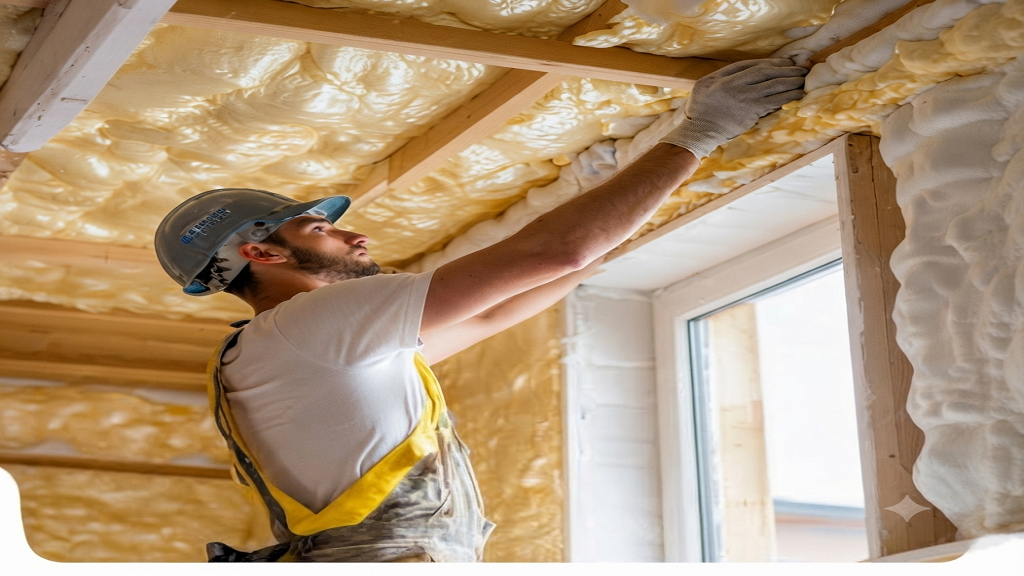
Do you turn on the heaters during the cold season and the air conditioning during the hot season and still feel that something is not right in your home? Maybe the issue is not with your devices but with the insulation of your house.
Poor thermal home insulation is one of the most common and least suspected issues with older houses, especially in Spain, where many homes were built before modern energy regulations. Here are some reasons why it might be the case.
1. Your Energy Bills Keep Climbing
This is typically the initial indication. If you perceive that your expenditure on energy for heating and air conditioning is exorbitant or escalating in tandem with no alterations in your patterns of living, it is plausible that there exists a breach in the building envelope allowing heat to dissipate. Buildings with inadequately insulated walls, ceilings and windows will require a greater expenditure of energy to maintain a comfortable temperature than those that have been properly insulated.
One simple method of detecting a potential issue is to compare your energy bills with those of a comparable residence in terms of size. A conspicuous disparity between the two can often be an accurate indicator of a problem.
2. Some Rooms Are Always Too Hot or Too Cold
Do the upstairs bedrooms feel like an oven on a July night, while the corner room is drafty all winter? Uneven temperatures are often due to uneven insulation, or, perhaps, areas of your home’s structure are allowing excessive heat gain or loss, such as exposed wall edges, corners and top-floor ceilings.
What are causing this?
Thermal bridges are points where heat tends to flow more readily, such as at the edge of a slab, pillars and balcony connections, etc.
3. Your Walls Feel Cold (or Warm) to the Touch
Place your hand on an exterior wall on a cold morning. If it feels significantly colder, it means that the wall is transferring the cold of the outdoors into the rooms. The reverse is the case in hot weather and a warm wall at night indicates an ingress of warm air into the room. A well-insulated wall will remain close to room temperature.
4. You See Damp, Condensation or Mould
Cold walls will encourage condensation which results in damp patches, peeling paint and black mould developing in corners, behind wardrobes and next to windows. This is not only unpleasant, but can lead to air quality problems within the house and damage to furnishings.
Note that damp can also be caused by leaking, or moist rising damp so it’s best to ascertain the source of the dampness before attempting redecoration.
5. Your Heating or Air Conditioning Never Stops
If your system runs almost constantly and fails to keep the house at a comfortable temperature, it has to fight a losing battle. Without proper insulation, conditioned air escapes almost immediately into the environment. This significantly reduces the efficiency of any heating or air conditioning equipment and shortens their service life due to the lack of intervals when the machines do not have to work.
6. Your Home Is Noisy
Insulation isn’t only about temperature. Many insulation materials, mineral wool in particular, also dampen sound. If you hear traffic, neighbors or wind more than you’d expect, your building envelope may lack the mass and layers needed to block noise. Better insulation often makes a home noticeably calmer as a side benefit.
7. Your Facade Is Cracked, Stained or Ageing
Visible cracks, flaking paint and stained render are more than cosmetic. They can let water into the wall, which reduces its insulating ability and speeds up deterioration. If your facade is due for renovation, that’s an ideal moment to upgrade the insulation at the same time.
What Are Your Options?
After identifying the problem, the priority is to choose the best possible solution. The most common thermal insulation methods are:
- External wall insulation (SATE / EIFS): panels installed on the outside of buildings, covered with a special render. This method is ideal for eliminating thermal bridges, saving space within the walls and insulating the facade of the building.
- Internal insulation: involves attaching boards directly to interior walls. It is useful when the technical ability to insulate on the outside is unavailable, although insulation is less efficient and requires significant space inside the building.
- Upgrading windows and roofs: a proven solution in areas where thermal losses are particularly large, but it may not be sufficient for eliminating temperature differences in the walls.
For the boards, there are several options available: expanded polystyrene (EPS), graphite EPS, extruded polystyrene (XPS) and mineral wool. The choice of material depends on the type of building, its location and many other factors. To help you choose the best solution, we have prepared an article comparing thermal insulation systems.
Frequently Asked Questions
How do I know that my house/flat needs insulation?
The most common signs are: high energy bills, temperature differences in different rooms, cold or warm spots on the walls, condensation and constantly running air conditioning or heating.
Can bad insulation lead to mould appearance?
Yes, since cold spots on the walls promote condensation which leads to mould growth.
Is insulation relevant only for cold countries?
Not at all. It also helps to keep the inside of the house cool in summer, thus reducing air conditioning costs. It is crucial in countries with a hot climate, such as Spain.
What insulation type is better for already built houses?
The most recommended solution for thermal renovation of already insulated buildings is the external one, since it seals all thermal bridges and renovates the facade. Internal insulation is relevant only when technical capabilities and ownership of the house from the outside are available.
How long does an insulation system last?
An properly installed insulation system may last for several decades, however, the lifetime may vary depending on the condition of the lacquer on the surface.
Can I stay at home while insulation is being installed?
In case of external insulation, you may stay at your home as installation works are done outside. There might be some noise, but interior temperature will barely change.
How could I understand what type of insulation my house needs?
The best way to know is to contact us for an obligation-free site survey. We will examine the current condition of your house and show what heat losses are contributing most to your energy bills. Then we offer the best solution in your case.
Conclusion
High bills, uneven temperatures, moist walls, noise, and a dull facade are signs that your house is asking for help. Left ignored, these factors can cost you dearly in energy bills, comfort, and repairs. The solution is to insulate it properly and solve a bunch of problems at once.
Ready to Find Out What Your Home Needs?
Our professionals at Ever-Coat will be happy to visit your site, analyze the current state of affairs, and advise you on what kind of system would be the most beneficial in your case. Don’t wait a minute longer: book a free site survey and find out more about our thermal insulation services!